AGOGE
ACQUISITIONS
AGOGE ACQUISTIONS
Ready for your next chapter? Selling your business is not just a transaction.
It's a once-in-a-lifetime decision that will shape your legacy and financial future
"Our boutique M&A advisory firm specializes in guiding founder-led businesses (under $10M revenue) through full or partial exits with confidence. We blend strategic exit planning with hands-on deal execution to maximize your company's value and ensure you achieve your personal and financial goals.
Whether you plan to exit in 1 year or 5, now is the time to start preparing for a successful sale on your terms."

Founder of AGOGE
Founder of AGOGE
Why Choose Us
You only get on shot at selling your business, you need a partner you can trust to get it right.
We are more then transaction brokers - we are relationship-driven advisors who invest in your success.

Extensive Network
Creators, capital, and operators aligned in one place. Strong network to tackle any challenge,
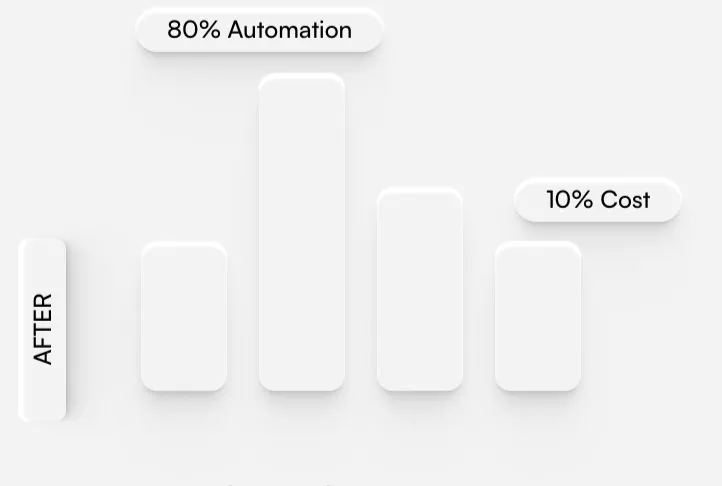
AI-Driven Process
We install automations that reduce founder-dependence and compress costs.

Exit On Your Timeline
Exit your business when you are ready and at your pace and for maximum value.
Why Choose Us
Partner with the deal team that turns founder-led companies into exit-ready assets
Extensive Network
Creators, capital, and operators aligned in one place.
AI-Driven Process
We install automations that reduce founder-dependence and compress costs.
Exit On Your Timeline
Exit your business when you are ready and at your pace and for maximum value.
What We Do
Looking to grow your business or exit for maximum value, we've got you covered.
Personalized, High-Touch Strategy
We take the time to understand your business inside-out and the legacy you want to leave. Our team works with you to craft a tailored exit strategy that aligns with your goals (whether that's maximizing sale price, taking care of your employees, or finding the right buyer to carry on your vision). This isn't a one-size-fits-all process. It's about your objectives and peace of mind
Experienced Dealmakers on Your Side
Most founders have never sold a business before - it's an experience like no other. Meanwhile, buyers (including private equity firms) do deals for a living. We level the playing field by bringing decades of M&A expertise to match the sophistication of the buyers.
From valuation through closing, we anticipate pitfalls, avoid costly mistakes, and negotiate fiercely on your behalf.
As industry veterans say: "Good M&A advice and execution pays for itself many times over" because it prevents value from being left on the table.
Trust, Transparncy & Partnerhsip
We pride ourselves on being a trusted partner in what may be the biggest financial transactions of your life. Expect plain spoken advice (no confusing banker jargon), honest evaluations, and proactive communication at all times. You'll get candid answers and regular updates to keep you in control and confident. And because we are selective in the clients we take on, you receive our full attention and availability. This is a high-touch, high-care relationship and we measure our success by your success.
Bottom Line
Selling a company is like nothing else most owners have experienced before but you don't have to go it alone. We partner with you to make sure your once-in-a-lifetime exit is handled right, with your interests front and center.
We deliver results and peace of mind .
What We Do
Looking to grow your business or exit for maximum value, we've got you covered.
Personalized, High-Touch Strategy
We take the time to understand your business inside-out and the legacy you want to leave. Our team works with you to craft a tailored exit strategy that aligns with your goals (whether that's maximizing sale price, taking care of your employees, or finding the right buyer to carry on your vision). This isn't a one-size-fits-all process. It's about your objectives and peace of mind
Experienced Dealmakers on Your Side
Most founders have never sold a business before - it's an experience like no other. Meanwhile, buyers (including private equity firms) do deals for a living. We level the playing field by bringing decades of M&A expertise to match the sophistication of the buyers.
From valuation through closing, we anticipate pitfalls, avoid costly mistakes, and negotiate fiercely on your behalf.
As industry veterans say: "Good M&A advice and execution pays for itself many times over" because it prevents value from being left on the table.
Trust, Transparncy & Partnerhsip
We pride ourselves on being a trusted partner in what may be the biggest financial transactions of your life. Expect plain spoken advice (no confusing banker jargon), honest evaluations, and proactive communication at all times. You'll get candid answers and regular updates to keep you in control and confident. And because we are selective in the clients we take on, you receive our full attention and availability. This is a high-touch, high-care relationship and we measure our success by your success.
Bottom Line
Selling a company is like nothing else most owners have experienced before but you don't have to go it alone. We partner with you to make sure your once-in-a-lifetime exit is handled right, with your interests front and center.
We deliver results and peace of mind .
Simple & Scalable
A transparent process of collaboration and feedback
01
Diagnose & Value Map
We start by building a roadmap to get your business "exit-ready". In this phase we set your exit goals and then roll up our sleeves to increase your company's value before going to market.
This can include tightening financials, documenting processes, diversifying customer base, mitigating any red flags, and generally polishing the apple for buyers.
We work with you on everything from valuation analysis to operation improvements so when you're ready to sell, your business commands the highest price.
This stage often begins 1-3 years before sale. Planning at least 18-24 months ahead to boost your sale ROI, reduce stress, and give yourself time to address any value gaps.

02
Go-to-Market Outreach
Next, we quietly take your company to market when the time is right. Our team will prepare a compelling Confidential Information Memorandum (CIM) and other marketing materials that tell your company's story in the best light.
We then research and identify ideal buyers. By targeting the right strategic buyers, we ensure those acquirers see grater value in your business because it fits their needs.

03
Deal Execution & Negotiation
Once serious buyers come forward, we shift into execution mode. This is where deals are won or lost. We quarterback the entire competitive process, from offer evaluation and negotiation to the due diligence process. We create leverage and push buyers to put their best foot forward. We take care of the tough stuff while you focus on your business without skipping a beat.

04
Post-Close Support
Closing day is not the end of our relationship - it's the beginning of your next chapter, and we'll be there to support you in that transition. After the ink dries, we remain available to ensure all post-sale matters go smoothly. Did the deal include an earn-out or seller financing? We'll help you track and enforce those provisions so you actually realize the full value we negotiated. Need guidance on communicating the change to employees or customers? We've got your back. We can also connect you with trusted partners for wealth management, tax planning, or whatever you need to navigate your newfound liquidity.
And if you're not riding off into the sunset but rather moving into a new role (or planning another venture), consider us a sounding board as you plan what's next. The bottom line: our advisory is relationship-driven, not transaction-driven, so you can count on us after the deal just as much as during it.

Ready to Maximize Your Exit
You've poured a lifetime of hard work into your business - now ensure you reap the rewards. Even if you're just beginning to consider an exit, the best time to get expert input is now. Many owners start planning well in advance of a sale, even before deciding definitely to sell, to keep all their options open.
Early insight and preparation will give you more control, less stress, and a higher ultimate payout. And rest assured, there's no pressure and no obligation in talking to us - only experienced guidance so you can make the right decisions when the times comes.
Take the first step toward a successful exit. Schedule a confidential, no-cost consultation with our team today, and discover how a relationship-driven M&A advisor can make all the difference in turning your business success into a legacy for the next chapter of your life. We're here to ensure your one shot at selling your company is a win - for you, your family, and the future you're building after the sale.
Let's plan your great exit story together.
Between The Streets
The only newsletter for modern day founders & dealmakers
Twice a month we share insights and systems that bring Wall Street structure to Main Street deals- without the suits.
Join other Founders, Creators, and Dealmakers who get access to the exact blueprints the 1% use on Wall Street.


Small Business Valuation Explained
TL;DR: The Value Bomb
Most business owners guess what their company is worth based on rumors or what they need to retire. This is a mistake. Your business is worth exactly what a buyer can verify in your bank account, adjusted for the risk that you might leave. To get the highest price, you must stop running your business to pay less taxes and start running it to show more profit.
Introduction: A Tale of Two Exits
Imagine for a moment that we are walking down Main Street in your town. On the left side of the street is a heating and air conditioning company owned by a man named Bob. On the right side of the street is a similar company owned by a woman named Sarah. Both Bob and Sarah have been in business for twenty years. Both of them have trucks that look the same. Both of them bring in about $3 million a year in sales. To the average person walking by, these businesses look identical. You might think they are worth the same amount of money.
But you would be wrong.
When Bob decided to sell his business last year, he had a hard time. He sat down with buyers and told them how great his company was. He told them he made a lot of money, even if his tax returns didn't show it. He explained that he paid for his family’s cars and his vacations through the business to save on taxes. He kept all the customer records in his head or on sticky notes. When he finally got an offer, it was for a price that barely covered his debts. He walked away angry, feeling like the market didn't appreciate his life’s work.
Sarah, on the other hand, spent the last three years preparing. She knew that buyers don't trust what they can't see. She hired a bookkeeper to make sure every dollar was accounted for. She stopped running personal expenses through the company. She built a team of managers so the business could run without her. When she went to market in 2025, she didn't have to convince buyers she was profitable; her bank statements proved it. She received multiple offers and sold her business for three times the price Bob was offered.
Why did Sarah win while Bob lost? It wasn't because she worked harder. It was because she understood the rules of the valuation game. She knew how to speak the language of the buyer. She understood that value is not just about how much money you make today, but how safe that money is for the person buying it tomorrow.
This guide is written to help you be like Sarah. We are going to peel back the curtain on how businesses are actually valued. We aren't going to use fancy Wall Street words that confuse people. We are going to use simple logic and clear examples. Whether you want to sell next month or in ten years, understanding these rules will help you build a company that is not just a job for you, but a valuable asset for your future.
The Deep Dive: How Much is My Business Worth?
When we talk about valuing a business, we are really trying to answer one simple question: How much cash will this business put in the new owner's pocket?
It sounds simple, but figuring out that number is where the confusion starts. You see, the profit you show the government to pay your taxes is not the real profit of your business. Your accountant’s job is to make your profit look as small as possible so you pay fewer taxes. A buyer’s job is to find out the real profit so they know if they can afford to buy your company.
To bridge this gap, we have to learn two different ways of counting money. Think of them as two different languages. One is the language of "Main Street" buyers, and the other is the language of "Wall Street" investors.
1. The Language of Main Street: SDE
If your business has less than $5 million in sales, or if you make less than $1 million in profit, you are likely in the "Main Street" market. The buyers here are usually individuals. They might be someone leaving a corporate job who wants to be their own boss. They might be a competitor down the street.
These buyers care about one thing: Seller's Discretionary Earnings, or SDE.
What is SDE?
Think of SDE as the "Total Owner Benefit." It answers the question: If I buy this business and work there full-time, how much total money will I have at the end of the year to pay my loan and support my family? 1
To find this number, we take your official net profit and we "add back" things that the new owner won't have to pay or that end up in your pocket.
The Simple Formula:
Start with Net Profit (What you told the IRS).
Add back Your Salary (Since the new owner will get this money).
Add back Your Perks (Your car, your health insurance).
Add back Interest and Depreciation (Non-cash items).
Result = SDE.
Imagine you own a duplex. You live in one side and rent out the other side. You want to sell the building to a young couple who plans to live there just like you do.
When they ask how much money the building makes, you wouldn't just tell them the rent from the other side. You would say, "Well, the tenant pays $1,000, plus you save $1,000 because you don't have to pay rent somewhere else."
That is SDE. It counts the cash form the business plus the money the owner saves or takes home personally. It assumes the buyer is going to roll up their sleeves and work in the business.
2. The Language of Investors: EBITDA
Now, let’s look at the other side. If your business is larger—say, over $5 million in sales or over $1 million in profit—you attract a different kind of buyer. These are professional investors, like Private Equity firms.
These buyers do not want to work in your business. They want to buy it and have someone else run it. They speak the language of EBITDA.
What is EBITDA?
EBITDA stands for Earnings Before Interest, Taxes, Depreciation, and Amortization.
For a professional buyer, the calculation is different from SDE. They don't look at your salary as "profit" they get to keep. They look at it as an expense. Why? Because if you leave, they have to hire a manager to replace you. They have to pay that manager a salary.
The EBITDA Formula:
Start with Net Profit.
Add back Interest and Taxes.
Add back Depreciation and Amortization.
Subtract a Manager's Salary (What it costs to replace you).
Result = EBITDA.
Now imagine you own a massive apartment complex with 100 units. You are selling it to a big real estate investment company. They aren't going to live in Unit 1. They aren't going to fix the leaky faucets themselves.
They are going to hire a property management company to run the place. So, when they calculate the profit, they take the total rent and subtract the cost of the manager. They don't care that you used to live there for free. They care about the profit left over for their investors after everyone has been paid to do the work.
Why This Difference Matters
This is the most common place where deals fall apart.
Let’s say you run a business and you pay yourself $200,000 a year.
To a Main Street Buyer: That $200,000 is part of the profit (SDE). It’s money they get to keep.
To a Private Equity Buyer: That $200,000 is a cost. They have to pay someone else that money to do your job. It is not profit.
If you try to sell your business to a professional investor using SDE numbers, they will think you don't understand basic math. You have to know which language to speak based on who is sitting across the table from you.
The Art of the "Add-Back": Finding Your Hidden Money
We mentioned "adding back" expenses. This is a critical step called "Recasting." It is like cleaning the dirt off a window so you can see the view clearly. Your tax return is the dirty window. The recasted financial statement is the clean one.
But you have to be careful. There are rules to this game. You can't just make things up.
The Green Light Add-Backs (Safe)
These are standard adjustments that almost every buyer will accept if you have proof.
Owner’s Salary: If you are selling to an individual, add your entire salary back. If selling to a firm, add back the difference between your salary and a market rate manager’s salary.
Personal Vehicles: If the company pays for your Ford F-150 but you don't use it for deliveries, that expense is a perk. We add it back.
Family on Payroll: Do you pay your teenage son $15,000 a year to "consult" but he actually just plays video games? Buyers know this happens. If that expense goes away when you sell, it’s an add-back.5
One-Time Legal Fees: Did you get sued five years ago and spend $20,000 defending it? That won't happen every year. We add that back.6
The Red Light Add-Backs (Dangerous)
These are the ones that make buyers trust you less.
"I forgot to invoice that": You cannot add back money you wished you had made.
"Failed Marketing": You spent $10,000 on Facebook ads and it didn't work. You can't add that back. Every business tries things that fail. That is a normal operating cost.
Repair bills: If the roof leaked and you fixed it, you can't add that back. Buildings need maintenance. If you hadn't fixed it, the buyer would have to.
Our Proven Strategy: We advise clients to keep a separate folder or digital tag for these expenses as they happen. Don't try to remember what you bought at Home Depot three years ago. If you track it monthly, you build a "clean" set of books that buyers will believe.
The Magic Number: The Multiple
Once we know your true cash flow (SDE or EBITDA), we multiply it by a number to get your valuation.
Cash Flow x Multiple = Price
If your SDE is $500,000 and the multiple is 3x, your business is worth $1.5 million.
But where does this "Multiple" come from? Is it 2x? 3x? 10x?
Think of the multiple as a Thermometer for Risk.
Low Risk = High Multiple. Buyers are willing to pay more because they are sure they will get their money back.
High Risk = Low Multiple. Buyers pay less because they are afraid the business might fail when you leave.
The Size Effect (Why Bigger is Better)
In 2025, we see distinct "buckets" or cohorts for multiples. You cannot compare a small coffee shop to a large software company.
The "Buying a Job" Buyer (Under $500k Earnings)
Multiple: 1.5x to 2.5x SDE.
Why: These businesses are risky. If the owner gets sick, the business stops. Banks are hesitant to lend a lot of money. Buyers are using their own savings and need to earn it back quickly.
The "Main Street" Buyer ($500k - $2M Earnings)
Multiple: 2.5x to 4.0x SDE.
Why: This is the sweet spot for SBA loans. The business likely has some staff and systems. It’s safer, so it commands a higher price.
The "Private Equity" Buyer ($2M+ Earnings)
Multiple: 4.0x to 7.0x EBITDA.
Why: Once you cross roughly $2 million in earnings, you become an "investment platform." Big money enters the room. Private equity firms compete with each other, driving the price up. This is why growing your business past this threshold can double its value—not just because you have more profit, but because every dollar of profit is worth more.
Why Your Friend is Lying About Their Multiple
You will hear stories at cocktail parties. "I sold my business for 8 times earnings!"
Be very careful with these stories. Usually, one of three things is happening:
Different Math: They might be using a multiple of Net Income (which is a tiny number) rather than EBITDA. 8x Net Income might be the same as 3x EBITDA.
The "Earnout" Trap: They might have sold for $1 million cash and $4 million in "future bonuses" if they hit impossible targets. They say they sold for $5 million, but they really sold for $1 million.
Real Estate Included: They might be counting the value of the building in the multiple, which skews the math completely.
Data Truth: We use trusted databases like DealStats and BizBuySell to find the truth.
BizBuySell tends to show lower multiples because it tracks smaller, broker-sold businesses.
DealStats often shows higher multiples because it tracks larger, audited deals.
You likely fall somewhere in between.
"Your business is not valuable because you are essential to it. It is valuable only when you are replaceable. The less the business needs you, the more a buyer will pay you."
Why "Mom and Pop" vs. "Private Equity" is a Mindset
One of the most important things to understand is the mindset shift required to move from a "Mom and Pop" valuation to a "Private Equity" valuation.
The Mom and Pop Mindset
Goal: Pay as little tax as possible.
Books: messy, cash-basis, done by a cousin.
Strategy: Keep everything stable. Don't take risks.
Valuation Result: Lower multiple (<3x). Buyers see a "fixer-upper."
The Private Equity Mindset
Goal: Show maximum operating profit (EBITDA).
Books: Clean, accrual-basis, audited.
Strategy: Growth. Invest in systems. Scale.
Valuation Result: Higher multiple (5x+). Buyers see a "turnkey engine."
You can run a small business, but you should try to adopt the mindset of a Private Equity owner. Even if you never sell to a big firm, having clean books and documented systems will make your business more valuable to anyone who buys it—even your neighbor.
The Cohort Trap
It is also vital to understand "Cohorts." A cohort is just a fancy word for a group of similar things. In valuation, data is collected in cohorts based on size.
You might see a report saying "Average Business sold for 4x earnings."
But if you dig into the data, you see:
Businesses with $500k earnings sold for 2.5x.
Businesses with $5M earnings sold for 6x.
The "average" is 4x.
If you have a smaller business and you ask for 4x because you saw the "average," you will never sell. You are pricing yourself out of your cohort. You have to compare apples to apples. Data sets like BizBuySell capture thousands of tiny deals, pulling their averages down. Data sets like DealStats capture fewer, bigger deals, pulling their averages up. You have to know which pool you are swimming in.
The Checklist: Is Your Business Ready?
Before you even think about calling a broker, ask yourself these five questions (these are just the tip of the iceberg). Be honest.
Can I prove my profit? Do I have 3 years of tax returns and bank statements that match?
Is my revenue diverse? Do I have one customer who pays more than 20% of my bills? (If yes, that is a risk).
Do I have a "Second in Command"? Is there someone who knows the passwords and the processes besides me?
Are my books clean? Are my personal expenses clearly marked and easy to separate?
Is my industry growing? Am I selling VHS tapes in a streaming world, or am I in a growing sector?
If you answered "No" to any of these, that is okay. It just means you have work to do before you can expect a premium valuation.
Final Words
Valuation is a journey, not a destination. The number someone puts on a piece of paper today is just a snapshot in time. You have the power to change that number.
By understanding the difference between SDE and EBITDA, by keeping clean records, and by building a business that can run without you, you are doing the hard work of value creation.
Don't be like Bob, angry that the market doesn't appreciate his hard work. Be like Sarah. Build a fortress of facts. Build a machine of management. And when the time comes, exit on your terms, for the price you deserve.
Ready to find out what your business is really worth? Don't guess. Book a Free Valuation Strategy Call with our team today. We will help you identify your SDE, find your add-backs, and give you a roadmap to a higher exit.

What Our Clients Say
Join customers who trust AI to transform their business.
Their AI-driven approach helped us reach the right audience and grow faster with smarter insights - streamlining our strategy, improving engagement, and delivering results we couldn't achieve before

This platform has completely transformed how we manage our marketing campaigns. The ease of use and powerful features have made a significant impact on our ROI.

This platform has completely transformed how we manage our marketing campaigns. The ease of use and powerful features have made a significant impact on our ROI.
This platform has completely transformed how we manage our marketing campaigns. The ease of use and powerful features have made a significant impact on our ROI.
Team Behind Success
Meet the experts behind our AI - driven to deliver smart solutions.
Jeremy Gonzales
Founder
Gwen Chase
Marketing

Gwen Chase
Marketing
Gwen Chase
Marketing
Gwen Chase
Marketing
Gwen Chase
Marketing
Questions? Answers!
Find some quick answers to the most common questions.
How do you help preserve my company’s culture and legacy during growth or exit?
We start by understanding your core values and the unique aspects of your business that make it special. Our frameworks and AI tools enhance operations while protecting your brand’s heart, ensuring potential buyers see both the numbers and the story that makes your business stand out.
Will using AI and automation disrupt my daily operations?
Not if it’s done right. We focus on creating a smooth, step-by-step rollout that integrates with your current processes. Our goal is to reduce chaos, not cause it, so your team stays productive and your customers continue receiving the personal touch they expect.
Do I have to sell 100% of my company or can I explore partial exits?
You have options. We map out scenarios that include full sales, partial sales, or staged buyouts. This flexible approach ensures you stay in control, choosing the path that best fits your personal and financial goals.
How quickly can I see results from your methods?
While every business is different, many founders see improvements in revenue and operational efficiency within the first few months. Our AI-powered frameworks target quick wins early, setting the stage for sustainable growth and a stronger valuation.
What if I’m not ready to sell right away—can I still work with you?
Yes. Preparing a business for a future exit is often a marathon, not a sprint. Even if you’re a few years out, we’ll help position your company for maximum value when the time comes, all while driving growth in the interim.
What if my business isn’t tech-savvy yet—can you still help?
Absolutely. Our team handles the heavy lifting on the technical side. We’ll guide you through each step of the process, from selecting the right tools to training your team, so you can confidently embrace AI and automation.
Will this affect my existing relationships with employees or customers?
Our approach is designed to safeguard the human elements of your business. We prioritize open communication, culture preservation, and employee engagement programs so that, as you grow, your team and customers feel included, valued, and excited for the next chapter.
How do you make sure my financial and operational data stay confidential?
We use secure platforms and strictly control access to sensitive information. Protecting your business’s privacy is a top priority, and we take every precaution to safeguard your data at each phase of the process.
How are you different from a traditional broker or consultant?
We don’t just list your business for sale or give you generic advice. We’re hands-on, merging proven frameworks with AI-driven solutions that boost revenue and operational efficiency. By tackling both strategy and execution, we position your company as a premium, future-ready asset.
What if I change my mind about selling once we start working together?
Our system isn’t just about exiting; it’s also about building a stronger, more profitable business. Whether you choose to sell in two years or ten, the improvements we implement will keep delivering value and make your operation easier to run.
AGOGE ACQUISTIONS
Maximizing Founder Exits While Preserving Their Legacy
AGOGE ACQUISITIONS © 2025 Designed by DealflowOS